
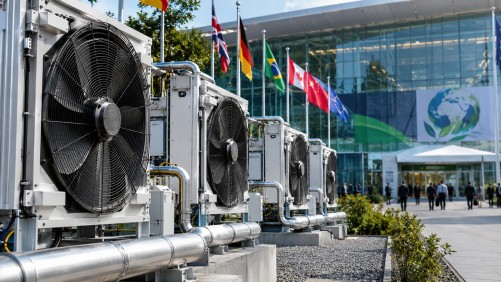
At the COP31 climate summit in Antalya, Turkey, the spotlight is on carbon dioxide removal (CDR) technology as countries deliberate over its inclusion in the final agreement. CDR technology aims to mitigate global warming by extracting carbon dioxide directly from the atmosphere and storing it underground, in oceans, or within other materials. Proponents assert that such technology could be crucial in reducing global temperatures if the world surpasses the internationally agreed 1.5°C warming threshold, calling for increased investment and a cohesive international framework to manage CDR initiatives.
Despite the enthusiasm from advocates, CDR technology is still in its nascent stages. Currently, approximately 2 billion tonnes of carbon dioxide are removed yearly, predominantly through reforestation efforts, whereas direct air-capture technologies contribute only a minuscule portion. Experts point to challenges such as limited investment, high operational costs, and scalability issues that currently impede the widespread adoption of these technologies.
Environmental groups express concerns that a reliance on future carbon removal could detract from immediate emission reduction efforts. They caution that large-scale CDR could pose risks to land use and marine ecosystems, potentially enabling continued fossil fuel consumption under the guise of offsetting emissions.
Notably, carbon dioxide removal is distinct from carbon capture and storage (CCS), which involves capturing emissions from industrial facilities before they enter the atmosphere. Both approaches, however, have been featured in a draft text under consideration at the climate talks, reflecting the ongoing debate on their roles in climate strategy.