
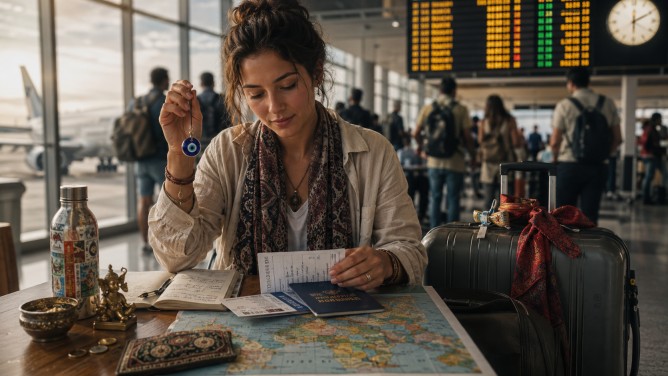
The thrill of travel is often accompanied by cultural customs and rituals that aim to ensure a safe and fortunate journey. Around the world, these superstitions have been woven into the fabric of travel experiences, offering both comfort and a sense of tradition to those on the move. From tapping on an airplane to carrying garlic, various beliefs continue to shape the way people approach their adventures.
In the Balkans, it is common for travelers to tuck a clove of garlic into their luggage. This practice stems from the belief that garlic can ward off negative energy and protect against the evil eye, thereby safeguarding the journey from misfortune. Meanwhile, a different form of protection can be found in the ritual observed by many air travelers: touching the exterior of an aircraft before boarding. This gesture is believed to bring good luck and provide a reassuring routine for those anxious about flying.
For some, the notion of beginning a journey “on the right foot” is taken quite literally. Travelers in various cultures ensure they step onto an airplane with their right foot first, as this is thought to invite good fortune. Similarly, in regions of the Middle East and the Balkans, families may pour or sprinkle water behind someone departing for a trip. The flowing water is meant to symbolize a smooth and safe journey, with hopes for the traveler’s eventual safe return.
Numerical superstitions also play a role in travel customs. In Western countries, the number 13 is often avoided due to its unlucky reputation, while in China, the number 4 is shunned because its pronunciation is similar to the word for death. Italy, on the other hand, considers 17 as unlucky. These beliefs can influence various aspects of travel, from hotel room assignments to building floor numbers. Another enduring tradition, particularly in Slavic cultures, involves sitting on packed luggage for a moment before setting off. This pause allows travelers to mentally prepare and collect their thoughts before embarking on their journey.
Finally, some cultures caution against sweeping the floor immediately after a traveler departs. This action is believed to metaphorically sweep away the traveler’s good fortune or impede their safe return. Though these superstitions lack scientific evidence, they remain an intriguing part of travel customs. For many, these rituals are less about validating superstitions and more about maintaining family traditions, cultural identity, and the joyous anticipation of embarking on a new journey.