
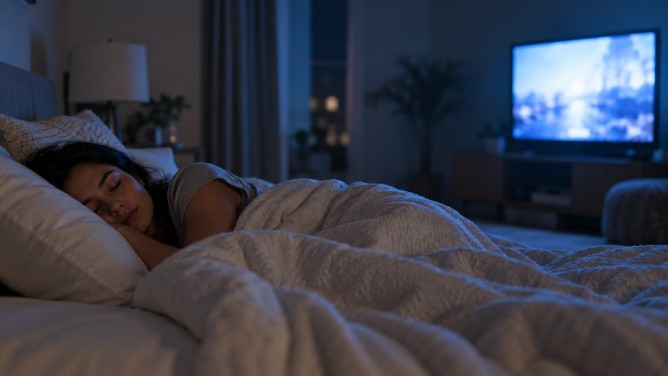
Falling asleep with the television on might be a common habit, but it could have implications for heart health beyond just disrupting sleep. Research indicates a connection between nighttime exposure to artificial light and changes in heart structure and function. This highlights the importance of maintaining a dark sleeping environment.
The body’s circadian rhythm, an internal 24-hour clock, regulates essential functions like sleep and hormone release. Darkness signals the body that it’s time to rest, while exposure to light at night can interfere with these natural processes. A study involving over 11,000 adults who wore wrist devices to measure light exposure found that higher light levels at night were associated with changes in heart characteristics. These included increased left ventricular mass, thicker heart walls, and reduced heart muscle contraction ability, which are indicative of concentric cardiac remodeling. Although these findings alone do not prove that nighttime light causes heart disease, they suggest a potential link.
Importantly, the study examined various sources of nighttime light, not just televisions. Lamps, streetlights, and other artificial sources may also contribute. Disrupted sleep is one possible explanation for the observed changes in heart structure. The body’s internal clock helps coordinate sleep timing and hormone release, and exposure to light at inappropriate times may disrupt this rhythm. The study found that shorter sleep duration accounted for part of the association between light exposure and heart changes, though other biological mechanisms might also play a role. More research is needed to understand whether reducing nighttime light exposure can prevent these changes.
Keeping the bedroom dark can support better sleep and potentially benefit heart health. A television left on all night can emit continuous light and sound, interrupting sleep even if one doesn’t consciously wake up. Simple habits like using a sleep timer for the TV, turning off unnecessary lights, blocking outdoor light with curtains, reducing screen use before bed, and maintaining a regular sleep schedule can contribute to a more restful sleep environment.
While occasionally falling asleep with the TV on might not pose a significant risk, consistently sleeping in a brightly lit environment could interfere with healthy sleep. Research links greater nighttime light exposure with differences in heart structure and function. For those concerned about heart health, discussing individual risk factors with a healthcare professional is advisable, alongside adopting better sleep practices.