
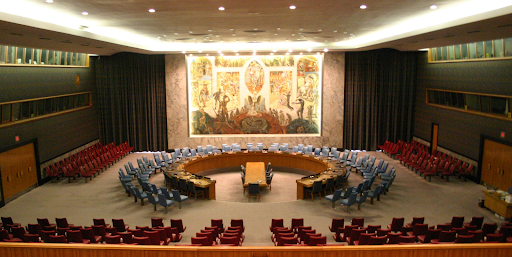
Israeli Prime Minister Benjamin Netanyahu has publicly voiced his opposition to a key element of the new UN-adopted Gaza peace plan, specifically its reference to a future Palestinian state. While the US-drafted resolution passed the Security Council on Monday, its language suggesting a “credible pathway to Palestinian self-determination and statehood” has created a political rift with the Israeli government, which is under pressure from right-wing members. Netanyahu’s statement on Sunday reiterated Israel’s opposition to a Palestinian state, creating an awkward political dynamic with his US allies.
The resolution, which endorses President Donald Trump’s 20-point plan, is a complex document. Its primary function is to authorize two new bodies: a “Board of Peace” chaired by Trump to manage reconstruction, and an “international stabilization force” (ISF) to demilitarize Gaza. Netanyahu’s government is aligned with the demilitarization goal, with the Prime Minister vowing to achieve it “the easy way or the hard way.” However, the political “pathway” mentioned in the text is a point of contention.
The US, which drafted the resolution, celebrated its passage. Ambassador Mike Waltz called it a plan to “dismantle Hamas’ grip” and create a “prosperous and secure” Gaza. President Trump hailed the vote as “historic.” The inclusion of the “statehood” language, however conditional, was likely crucial in securing the support of the Palestinian Authority. Diplomats confirmed that the PA’s endorsement, which came last week, was “key to preventing a Russian veto.”
That potential veto from Russia did not materialize, but the country, along with China, did abstain from the vote. Russian Ambassador Vasily Nebenzya criticized the resolution for sidelining the UN and giving “complete control” to the US-led board and ISF. He expressed skepticism about “Washington’s promises” and the unknown “modalities” of the new framework.
While Israel objects to the political horizon, Hamas objects to the security one. The militant group, which the ISF is meant to disarm, issued a statement rejecting the resolution entirely. It called the plan an “international guardianship” and defiantly stated that it “will not disarm,” setting the stage for conflict and highlighting the immense difficulty of implementing a plan that is opposed, in whole or in part, by nearly every key party.