
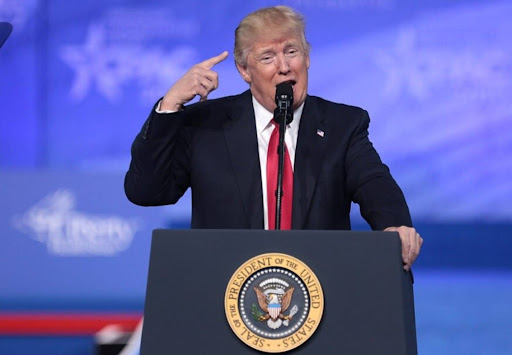
The International Energy Agency used extraordinary language Thursday, describing the oil supply disruption caused by the US-Iran conflict as the biggest in recorded market history. President Trump’s response was equally extraordinary: he called it a secondary problem. In a Truth Social post, Trump stated that stopping Iran from developing nuclear weapons is of “far greater importance” than the historic oil price spike. The juxtaposition of the two statements captured the fundamental tension between market realities and the administration’s strategic priorities.
Gulf producers have slashed output by roughly 10 million barrels per day amid the conflict — nearly 10% of global demand. Brent crude rose as much as 10% Thursday to briefly surpass $100 per barrel, while West Texas Intermediate approached $96. The IEA responded with the largest coordinated emergency reserve release on record, mobilizing 400 million barrels from its member nations. The US separately announced a release of 172 million barrels from its Strategic Petroleum Reserve.
Trump’s Truth Social post offered a counterintuitive economic argument: as the world’s largest oil producer by a significant margin, the United States actually earns more revenue when oil prices rise. While acknowledging this financial dimension, he stated that it pales beside his presidential priority of stopping Iran — an evil empire in his words — from getting nuclear weapons and destroying the Middle East and potentially the world.
The practical implication of Trump’s framing is significant. If the oil crisis is genuinely secondary in the administration’s calculus, then the conflict will not end because of market pressure alone. Trump reinforced this on Wednesday by telling reporters that US forces have delivered historic levels of military force against Iran and are not finished. He also dismissed concerns about Iran attacking the United States.
The IEA’s emergency action and the US reserve release have modestly eased prices without resolving the underlying supply crisis. Trump’s mixed messaging — suggesting both that the war may end soon and that it is not yet finished — continues to generate uncertainty. Global markets remain in a state of anxious vigilance.