
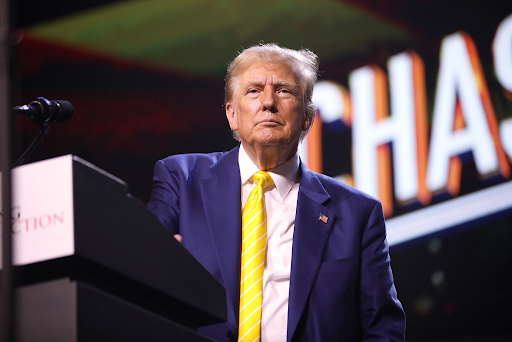
The United Kingdom’s carefully negotiated 10% tariff agreement with the United States has been thrown into jeopardy after President Trump announced Saturday a sweeping 15% tariff on imports from all countries worldwide, using a new legal authority after the Supreme Court invalidated his previous trade mechanism.
Trump cited Section 122 of the Trade Act of 1974, which allows a president to impose tariffs of up to 15% for 150 days before requiring congressional approval. The announcement, made on Truth Social, came just hours after the Supreme Court ruled 6-3 that his use of the IEEPA was unlawful without legislative backing. No president has ever previously invoked this particular provision.
For British businesses, the announcement creates fresh anxiety. The UK had secured an agreement with the US at the 10% level, and William Bain of the British Chamber of Commerce warned that the hike to 15% would harm trade and weaken economic growth. He called for the kind of clarity and certainty that escalating tariffs are failing to provide.
European leaders were equally vocal. Germany’s Chancellor Merz called tariff volatility “the biggest poison” for transatlantic economies and announced plans to travel to Washington with a coordinated European response. France’s President Macron praised the Supreme Court’s role in checking executive power and emphasized the importance of fair, reciprocal trade rules.
Trump’s furious response to the court ruling included personal attacks on justices who voted against him, including calling his own nominees Barrett and Gorsuch “an embarrassment to their families.” Meanwhile, with 90% of the $130 billion in collected tariffs paid by American businesses and consumers, the new 15% rate promises to deepen domestic economic strain.